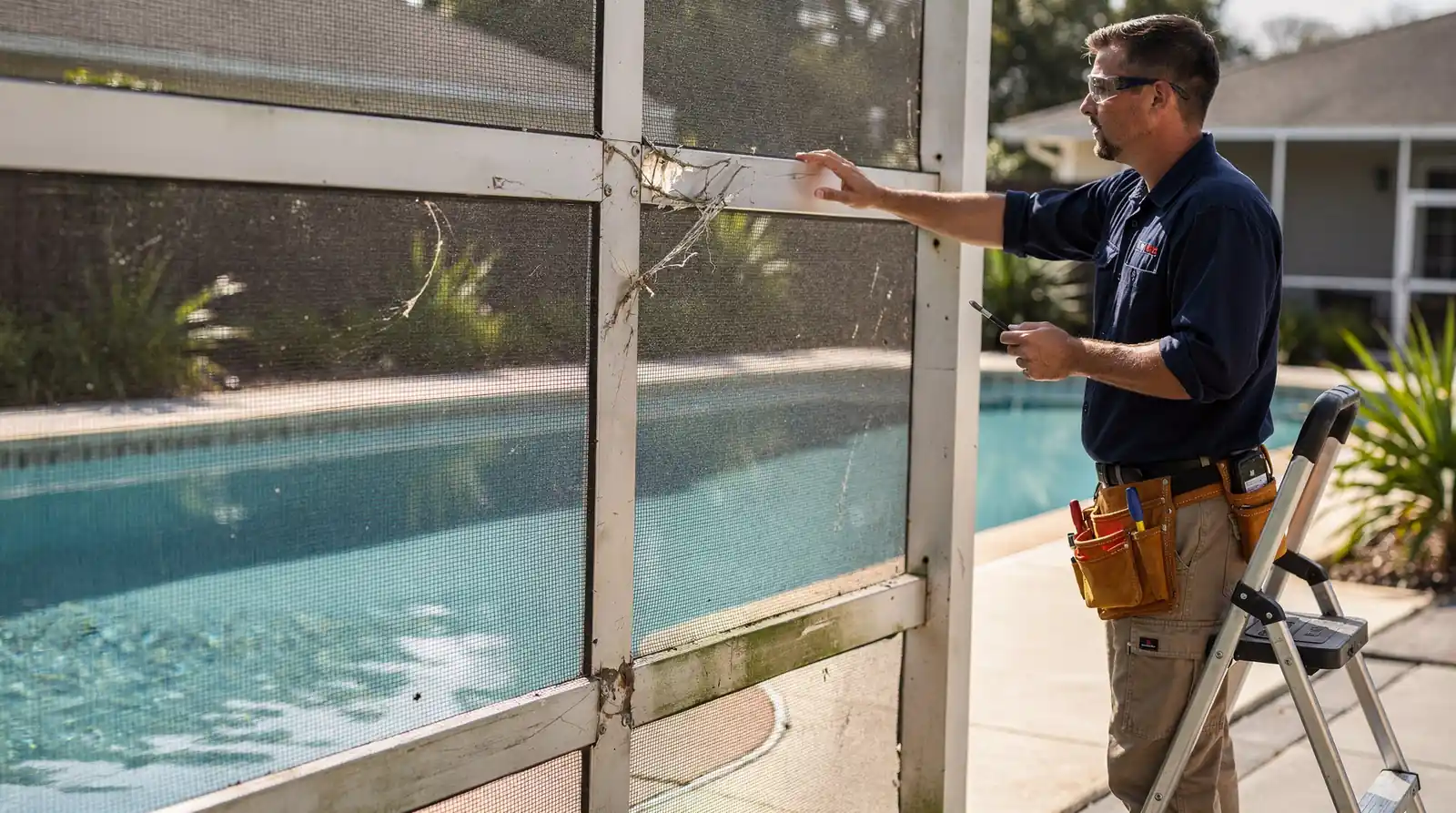
Florida homeowners should plan a pool cage extension when the current enclosure nears 10 years old or shows sagging panels. Properties throughout Florida, especially across Southwest Florida communities like Bradenton and Venice, benefit most from this work before hurricane season. Gulf Gate Aluminum, based in Sarasota, FL, provides free estimates and evaluates structural readiness for extensions across Southwest Florida.
Key Takeaways
- Florida’s intense sun, salt air, and humidity significantly reduce pool cage lifespan without regular maintenance.
- Monthly maintenance tasks prevent costly repairs and extend your enclosure’s functional life by years.
- Hurricane season and heavy rainfall create structural stress requiring inspection and reinforcement every 12 months.
- Gulf Gate Aluminum’s professional assessment identifies when replacement becomes more cost-effective than continued repairs.
How Long Does a Florida Pool Cage Really Last?
Most Florida pool enclosures last between 10 and 20 years, with actual lifespan tied to sun exposure, coastal air, and construction quality. Aluminum structures built with strong materials and maintained consistently tend to land at the higher end of that range. Screened enclosures aren’t optional extras for Florida homes. They keep insects out, add a layer of safety for children and pets, and cut down on pool cleaning and chemical use.
Florida’s climate is unforgiving on outdoor structures. Sun, salt air, humidity, and wind place constant stress on frames and screening, year-round, not just during hurricane season. Coastal properties in particular face accelerated wear from salt exposure, while inland homes battle intense UV and heavy summer rain.
What Factors Shorten a Pool Cage’s Lifespan?
Several conditions push a structure toward the lower end of its expected life span. Proximity to saltwater, lack of routine cleaning, and delayed repairs all speed up deterioration. Homes near the Gulf or Atlantic coastline typically see faster screen and frame wear than those farther inland.
Does Maintenance Really Extend a Pool Cage’s Life?
Yes. Enclosures that receive regular inspection and prompt pool cage repair consistently outlast neglected structures. Catching loose fasteners, small tears, or frame corrosion early prevents minor issues from becoming full replacements.
Homeowners planning an outdoor upgrade often combine repair work with a pool cage extension, expanding covered living space while addressing wear on the existing structure. Comparing outcomes makes the value of upkeep clear:
| Maintenance Approach | Typical Lifespan Outcome |
| Minimal upkeep, coastal exposure | Lower end of 10-20 year range |
| Routine cleaning and inspection | Mid-to-upper range |
| Prompt repairs plus quality materials | Upper end of 10-20 year range |
Gulf Gate Aluminum serves Southwest Florida homeowners with inspections, repairs, and extensions built for the state’s demanding climate.
How Long Do Pool Screens Last Before Repair?
Well-maintained pool screen enclosures across Florida typically last 7 to 10 years before replacement becomes the smarter choice. Screen life depends on more than a calendar date. Material quality, installation standards, and local weather exposure all shape how long a cage holds up, and skipping pool cage repair along the way shortens that window fast.
Florida pool areas stay in use for most of the year. That constant activity puts real strain on screens, frames, and fasteners. A Florida homeowner grilling poolside every weekend asks more of an enclosure than a seasonal cabin owner up north ever would.
Sun exposure carries most of the blame. UV rays fade aluminum coatings and turn once-flexible screening brittle and prone to tearing. Once that brittleness sets in, small tears spread quickly during storms or routine pool maintenance.
What Signs Point to Repair Instead of Replacement?
Loose panels, minor tears, and faded frame sections usually signal repair, not replacement. Gulf Gate Aluminum ships materials and crews to homeowners across Bradenton, Venice, and Lakewood Ranch for exactly this kind of targeted fix.
Does Adding On to a Cage Affect Its Lifespan?
A pool cage extension introduces new seams and connection points that need the same attention as the original structure. Homeowners planning an addition should confirm the existing frame can support it before work begins.
Signs enclosures need attention:
- Screens sagging or tearing at the corners
- Frame coating visibly chalky or faded
- Fasteners rusted or loosening at the joints
What Maintenance Keeps a Pool Cage Strong?
Consistent upkeep keeps a Florida pool cage standing strong against a year-round assault of sun, heavy rain, humidity, salt air, insects, pollen, hurricane season, and falling debris. No screen enclosure in Southwest Florida escapes that workload. Homeowners who schedule regular care extend the life of their enclosure and keep the outdoor space clean, safe, and comfortable for everyday use.
Skipping maintenance lets small problems turn expensive fast. A loose panel or corroded fastener left unchecked often becomes a full pool cage repair job once storm winds find the weak spot. Catching wear early, on the other hand, protects the investment and avoids the cost of emergency fixes after a major storm rolls through.
When should a pool cage get inspected?
Early in the year works best. An inspection right after the cooler months, before spring pollen and storm season arrive, gives homeowners a clear picture of any winter wear. That timing also creates a natural checkpoint for planning repairs before humidity and heavy rain return in full force.
A dependable maintenance routine typically includes:
- Checking screen panels for tears, sagging, or loose spline
- Inspecting aluminum frames for corrosion near screws and joints
- Clearing gutters and roof lines of pollen, leaves, and debris
- Testing door hardware and hinges for smooth operation
- Reviewing the structure for storm damage after major weather events
Does a growing outdoor space need extra attention?
Yes. A pool cage extension built to cover a new deck or seating area needs the same seasonal checks as the original enclosure. Bradenton and Venice homeowners adding square footage should fold the new section into their existing maintenance schedule rather than treating it separately.
When Does Repair Turn Into Replacement?
A pool cage becomes replaceable once corrosion spreads across the frame or the structure loses its alignment. At that point, patching no longer makes financial sense. Florida’s coastal air plays a major role in that timeline. Moisture and salt accelerate corrosion around screws and joints faster than most homeowners expect.
Storm season adds another layer of stress. Frequent storms put additional strain on the structure, loosening fasteners and bending panels that were already weakened by years of sun and humidity. A cage that has weathered several hurricane seasons often shows compounding damage that small fixes cannot fully address.
Pool cage repair extends the life of an enclosure for a while. Screens get replaced, fasteners get tightened, and corroded panels get swapped out individually. But there’s a tipping point: once the cost and effort of patching exceed the value of the structure, replacement becomes the more practical path forward.
How can homeowners tell repair is no longer worth it?
Widespread corrosion along multiple frame sections, rather than a single isolated spot, signals that patching will only delay the inevitable. A structure that has visibly shifted out of alignment also points toward replacement rather than another round of repairs.
Is a pool cage extension a repair or a replacement project?
A pool cage extension falls outside standard repair work, since it expands the footprint rather than restoring existing material. Homeowners throughout Southwest Florida, including Bradenton and Venice, often pursue extensions when they want more covered deck seating, and pairing that expansion with replacement of aging sections makes structural and financial sense at the same time.
Ready to Extend Your Pool Cage This Year?
Spring and summer bring the strongest case for enlarging a screen enclosure anywhere in Florida. Southwest Florida homeowners gain months of extra outdoor living when a cage stretches over a new lanai, deck, or seating area rather than staying boxed to its original footprint. Waiting costs more than money; it costs another season spent battling mosquitoes, pollen, and afternoon downpours on an uncovered patio.
Gulf Gate Aluminum, based in Sarasota, FL, serves homeowners throughout Southwest Florida with enclosure work built for this climate. The team handles full rescreening, structural replacement, small screen panel repair, and custom pool cage extension projects designed to keep an outdoor space protected through every season. Enclosure options extend beyond standard cages, too, including composite roof structures and picture-view panels that open sightlines while still covering added square footage.
How much space can a pool cage extension add?
Extensions are sized around the existing footprint, the yard’s layout, and how the homeowner plans to use the new area, whether that’s a dining deck, a fire pit corner, or extra pool deck. A site visit determines what framing and screen structure the expansion needs before any work begins.
Is small screen damage worth fixing before an extension?
Yes. Addressing pool cage repair needs, torn panels, loose fasteners, weakened frame sections, before adding new square footage protects the whole structure from uneven stress. Skipping this step risks compromising both the old cage and the new addition together.
Gulf Gate Aluminum provides free estimates quickly, and most hardscape and outdoor living projects finish faster than homeowners expect. A phone call starts the process toward a properly extended, storm-ready enclosure.
FAQ
When should Florida homeowners consider a pool cage extension?
Plan an extension when the enclosure nears 10 years old or shows sagging panels. Florida homeowners, particularly across Southwest Florida communities like Bradenton and Venice, benefit most from completing this work before hurricane season.
How long does a Florida pool cage typically last?
Most Florida pool enclosures last 10 to 20 years, depending on sun exposure, coastal air, and construction quality. Consistent maintenance and strong materials push structures toward the higher end of that range.
Does routine maintenance affect when an extension is needed?
Yes, enclosures with regular inspection and prompt repair consistently outlast neglected structures. Gulf Gate Aluminum evaluates structural readiness and offers free estimates for extensions across Southwest Florida.