Most pool cages in Southwest Florida last for many years, but not forever. Salt air, sun, storms and time take their toll on aluminum framing and fasteners. When repairs stop making sense, a full pool cage replacement gives you a stronger, cleaner and safer enclosure built to today’s code.
If you have never replaced a pool enclosure before, the process can feel like a big unknown. Here is what to expect from the first phone call to the final inspection.
Signs Your Pool Cage May Need Replacing
Not every worn enclosure needs to come down. Rescreening and refurbishment can fix a lot. But replacement is usually worth a look when you see:
- Bent, cracked or twisted beams, often after a storm or a fallen limb
- Corrosion at the base plates, gutters or connections, especially near the coast
- Sagging roof sections or doors that no longer close square
- Repeated repairs in the same areas
- An older structure that may not meet current wind-load requirements
- A remodel, such as a new pool, a bigger deck or a change in roof line
An inspection from an experienced contractor will tell you whether the frame can be saved or whether replacement is the better long-term value.
Step 1: On-Site Inspection and Free Estimate
The process starts with a visit to your home. A Gulf Gate Aluminum estimator looks at the frame, the screen, the fasteners, the deck attachment points and how the enclosure ties into your house. We measure, talk through how you use the space, and discuss options such as roof style, picture-window panels, doors and screen types.
You will get a written estimate that spells out the scope of work. If refurbishment or rescreening would do the job, we will tell you.
Step 2: Design Choices
A replacement is a chance to upgrade. Common decisions include:
Roof style and height
Mansard, dome, gable and flat roof styles each change the look, the views and the engineering. A taller roof can make the space feel more open.
Screen type
Standard pool-and-patio screen is the most common choice. Finer mesh helps keep out tiny biting insects, heavier pet-resistant screen holds up better to claws, and privacy screen on lower panels adds seclusion.
Picture-window panels and doors
Wider panels at eye level open up the view to your yard or the water. You can also choose where doors go and how many you need.
Frame color
White and bronze are the most popular finishes, and the right choice depends on your home’s exterior.
Step 3: Engineering and Permits
A full pool cage replacement in Sarasota County or Manatee County requires a building permit and engineered drawings that meet Florida Building Code wind-load requirements for your location. Your contractor should handle the drawings, submit the permit and schedule inspections.
This step often takes the longest, because it depends on permit office review times. Your contractor can give you a realistic estimate based on current conditions.
Step 4: Removal of the Old Enclosure
Once the permit is approved and materials are ready, the crew removes the old screen and framing. Expect the team to:
- Protect the pool, deck and landscaping
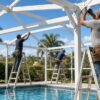
- Take down the structure in sections
- Haul away the old aluminum and screen
- Inspect the deck and footers where the new frame will attach
Plan for your pool area to be an active work zone during this stage. Keep kids and pets away and move patio furniture out of the way ahead of time.
Step 5: Installing the New Pool Cage
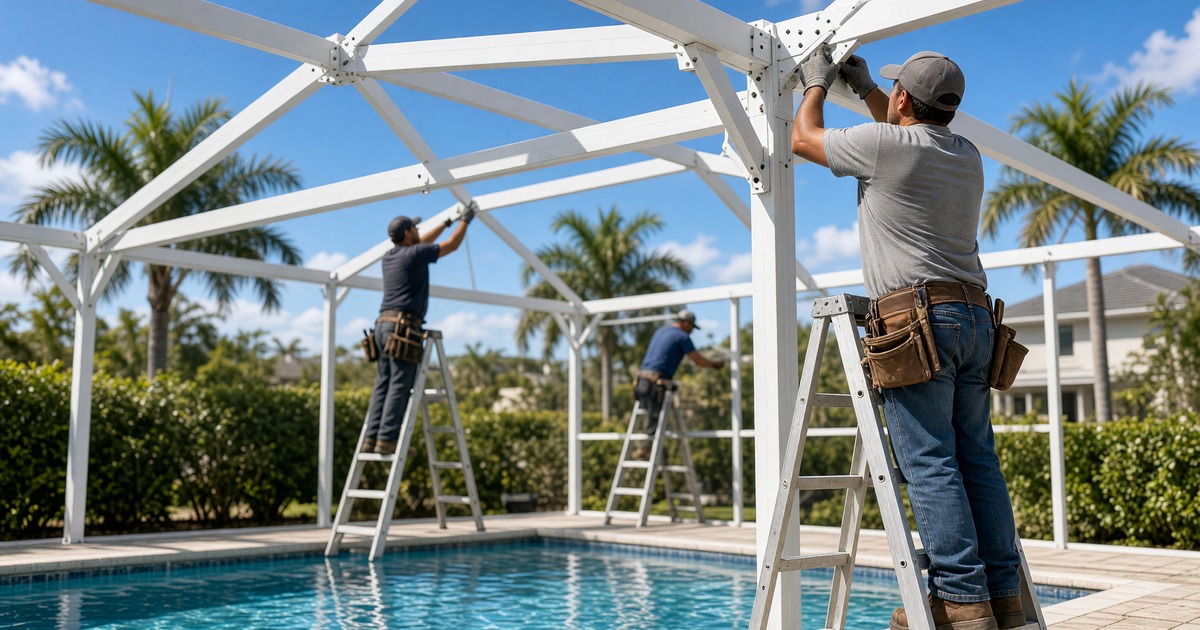
The new frame goes up according to the engineered plans: base plates and beams, then roof members, braces and gutters, then doors. Fasteners matter here. Long-lasting hardware resists the corrosion that shortens the life of so many Florida enclosures.
After the frame is complete, the crew installs the screen panel by panel, tensions it, and seals the spline so the screen stays tight.
Step 6: Final Inspection and Walk-Through
The building department inspects the finished structure. Once it passes, you should get a walk-through to check doors, closers, screen tension and cleanup. This is also the time to ask about care: rinsing the frame, checking screws and keeping plants and trees trimmed back.
How Long Does Pool Cage Replacement Take?
The on-site work for a typical replacement is often measured in days, not weeks. The overall timeline depends mostly on permitting, engineering and material availability, plus weather. Your estimate should include an expected schedule so you can plan around it.
Protecting Your New Enclosure
A new pool cage stays strong longer with simple care:
- Rinse the frame and screen a few times a year to remove salt, pollen and mildew
- Check for loose or rusted screws and replace them early
- Repair small screen tears before wind turns them into big ones
- Keep tree limbs trimmed away from the roof
Gulf Gate Aluminum also offers maintenance plans to keep enclosures in good shape year after year.
FAQ
Do I need a permit to replace my pool cage?
Yes. A full replacement in Sarasota or Manatee County generally requires a building permit and engineered drawings that meet Florida Building Code wind requirements. Your contractor should handle this for you.
Can I keep using my pool during the replacement?
Usually not while the crew is removing the old frame and installing the new one. The area is an active job site. Once the work is complete and inspected, you can enjoy the pool again.
Should I rescreen or replace my pool cage?
If the aluminum frame is sound, rescreening and refurbishment are often the more affordable option. If you see bent beams, heavy corrosion or repeated failures, replacement is usually the better investment. An on-site inspection will help you decide.
Schedule Your Pool Cage Replacement Estimate
Gulf Gate Aluminum replaces pool cages for homeowners in Sarasota, Bradenton, Lakewood Ranch, Venice and nearby communities. Call (941) 306-3448 (Mon–Fri, 8 a.m.–5 p.m.) or request a free estimate. See our pool cage and screen enclosure services for more options.