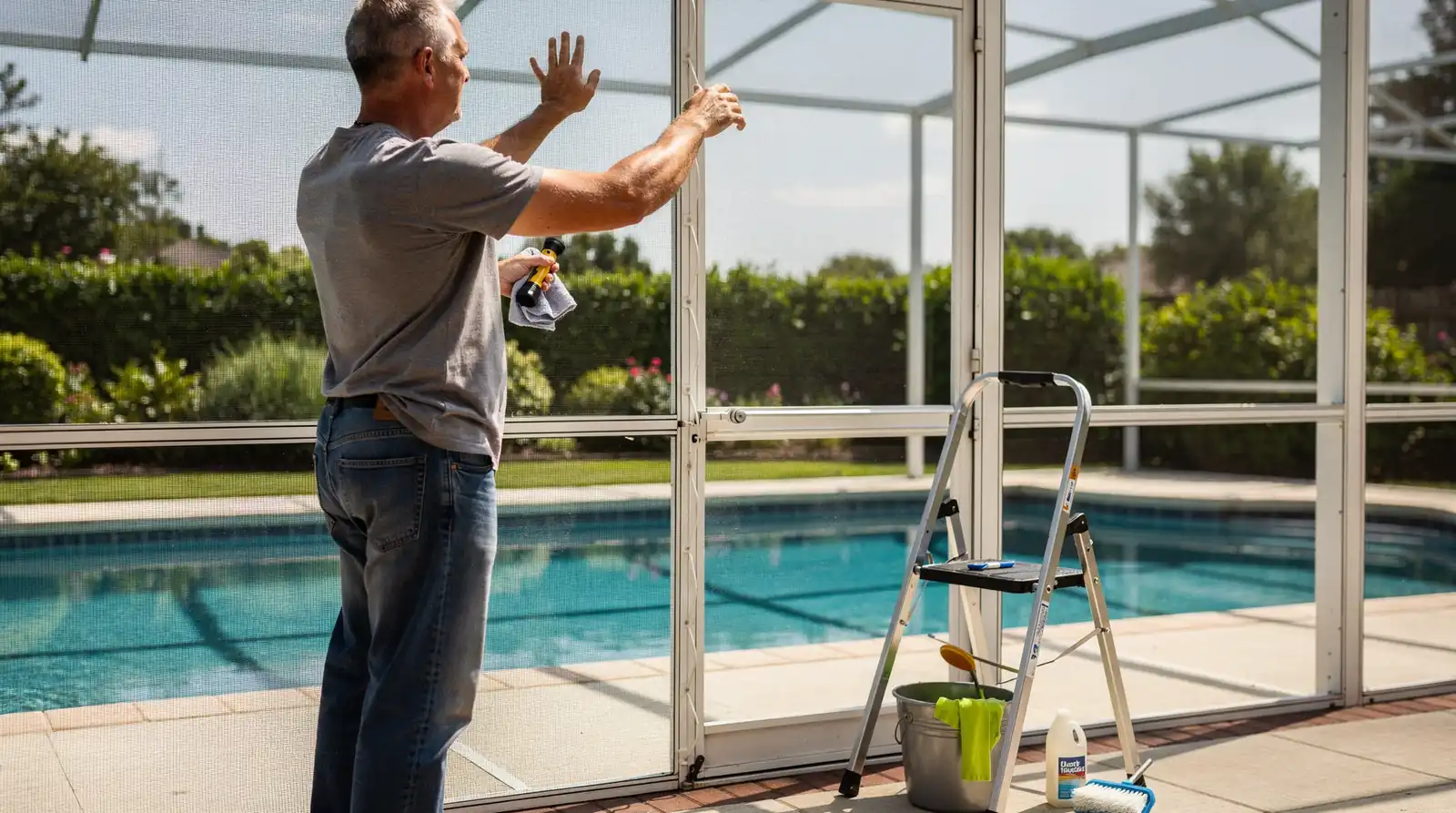
Preparing your pool cage for hurricane season starts with trimming surrounding trees and shrubs. Flying debris is a primary cause of hurricane-related screen damage. Remove all loose outdoor furniture, inspect screen frames for existing damage, and consider professional reinforcement. Especially as the Atlantic hurricane season runs June 1 through November 30.
Preparing a pool cage for hurricane season starts with inspecting screens and structural frames for existing damage. Flying debris ranks as the primary cause of hurricane-related enclosure failures. Homeowners across Sarasota, Bradenton, Venice, and Lakewood Ranch benefit from professional rescreening, trimmed landscaping. Removing loose outdoor items before storms arrive.
Key Takeaways
- Hurricane season runs June 1 through November 30, requiring pool cage preparation during this six-month period.
- Pool cages rank among the most vulnerable property features during Southwest Florida storms and hurricanes.
- Securing your pool enclosure minimizes damage and prevents outdoor living spaces from becoming safety hazards.
- Sarasota, Fort Myers, Cape Coral, and Naples homeowners must prioritize pool cage protection before storms arrive.
What Do You Need Before Starting?
Successful pool cage hurricane protection starts with gathering the right information. Completing a thorough inspection before Atlantic hurricane season opens on June 1. Skipping this preparation phase turns a manageable maintenance task into an expensive emergency repair after a storm passes through.
Prerequisites before any prep work begins:
- Schedule a professional inspection of the pool cage frame, screen panels, and all structural connections — identify damage before storms arrive.
- Document existing conditions with photos of every screen panel, corner bracket, and beam so damage claims are straightforward after a storm.
- Confirm the service area — Gulf Gate Aluminum serves homeowners across Sarasota, Bradenton, Venice, and Lakewood Ranch, so local clients should contact the team early in the season before scheduling fills.
- Identify the scope of work needed — determine whether the structure requires full rescreening, structural replacement, small panel repairs, or custom enhancements.
- Set a completion deadline — all prep work should be finished well before November 30, when Atlantic hurricane season closes.
Why Does Timing Matter So Much?
Pool cages are both valuable and fragile. A structure that enters storm season with compromised screens or weakened framing faces a far greater risk of costly damage than one that has been properly serviced.
What Services Should Homeowners Ask About?
Pool cage maintenance covers a wide range of work. Gulf Gate Aluminum specializes in full rescreening, structural replacements, small screen panel repairs, and custom enhancements — giving homeowners a single trusted source for every preparation need. cite-1
How Do You Inspect and Maintain Your Pool Cage?
Pool cage maintenance begins with a systematic visual inspection of every structural component, followed by targeted repairs before Florida’s storm season intensifies. Skipping this routine leaves framing, fasteners, and screen panels vulnerable to accelerating deterioration — damage that compounds quickly in Southwest Florida’s salt air and heat.
Prerequisites: Clear the area around the cage of furniture and debris before starting. Inspect during daylight hours for maximum visibility.
What Should Homeowners Check During a Pool Cage Inspection?
A thorough inspection covers four core areas:
- Examine the frame. Walk the perimeter and look for bent, corroded, or cracked aluminum members. Compromised framing must be addressed through structural replacement before storm season arrives.
- Check screen panels. Identify torn, sagging, or punctured panels — even small openings allow insects, debris, and wind-driven water to enter.
- Inspect fasteners and anchors. Look for loose screws, missing bolts, and deteriorating base anchors at the slab connection points.
- Assess the surface condition. Mold, algae, and oxidation on the aluminum frame signal that a professional pressure wash is overdue.
- Test door hardware. Open and close every screen door to confirm hinges, latches, and closers function correctly.
When Should a Professional Handle Pool Cage Repairs?
Structural issues exceed the scope of routine homeowner maintenance. Gulf Gate Aluminum — a certified expert trusted for pool cage projects and hard-scape work. Outdoor living installations — specializes in full rescreening, structural replacements, and custom enhancements. The team applies durable materials and proven installation methods engineered to withstand the harsh Floridian environment. For pool cage hurricane protection, professional structural assessment before June 1 is the most reliable safeguard against storm-season damage. Gulf Gate Aluminum also offers pool cage refurbishment. Pressure washing services, restoring both the appearance and integrity of aging enclosures. cite-1
How Should You Secure Outdoor Furniture and Loose Items?
Removing all unsecured items from the pool cage area is a non-negotiable step when a hurricane warning is issued. cite-2 Loose furniture, decorative pieces, and equipment become dangerous projectiles in high winds. And the pool cage structure itself ranks among the most vulnerable features of any outdoor living space during storm season. cite-3
Prerequisites: Complete any outstanding pool cage maintenance tasks — torn screens, loose fasteners, or weakened frame joints — before storm season begins. Addressing structural weaknesses in advance reduces the risk of catastrophic failure when winds arrive.
What Items Should Homeowners Remove From the Pool Cage Area?
Homeowners should clear every unsecured object from the pool cage enclosure and surrounding patio before a storm makes landfall. Furniture, planters, grills, toys, and decorative accessories all qualify as hazards once wind speeds climb.
Follow these steps in order:
- Audit the space. Walk the entire pool cage area and identify every item that is not permanently anchored to the structure or deck.
- Move furniture indoors. Carry chairs, tables, loungers, and cushions into the garage or interior of the home.
- Store smaller accessories. Place planters, lighting fixtures, pool toys, and decorative items in sealed storage containers or an interior room.
- Secure what cannot be moved. For oversized items that cannot be relocated, use heavy-duty straps rated for high-wind conditions to anchor them to fixed structural points.
- Clear the pool deck perimeter. Remove any items stored along the outer edges of the enclosure where wind exposure is greatest.
Why Does Preparing Outdoor Items Alongside the Pool Cage Matter?
Treating pool cage hurricane protection, landscaping, and outdoor furniture as a single coordinated checklist. Rather than separate tasks — gives homeowners significantly more confidence heading into storm season. cite-3 A pool cage that is structurally sound but surrounded by unsecured debris still faces serious risk. Gulf Gate Aluminum recommends homeowners in Sarasota communities approach storm preparation as one unified process, not a series of isolated steps.
How Do You Manage Landscaping to Protect Your Enclosure?
Flying debris ranks as a primary cause of hurricane-related damage to screen enclosures across Southwest Florida. cite-2 Proactive landscaping — trimming trees, removing dead branches. Securing fragile bushes — directly reduces the risk of yard debris puncturing a pool cage hurricane protection barrier during a storm. cite-2
Before beginning any pre-storm landscaping work, homeowners should complete a full yard assessment. Identify every tree, shrub, and potted plant within striking distance of the enclosure structure.
Steps to Prepare Landscaping Before a Storm
- Trim overhanging tree branches that extend toward or above the enclosure roofline.
- Remove dead branches from all trees on the property — dead wood breaks away first in high winds.
- Secure or relocate fragile bushes that could uproot and become airborne projectiles.
- Clear loose yard debris such as fallen limbs, stones, or garden tools from the surrounding area.
- Inspect the perimeter of the enclosure for any vegetation pressing against the frame or screen panels.
Why Does Dead Wood Pose Such a High Risk to Screen Enclosures?
Dead branches lose structural integrity long before a storm arrives. During high winds, dead wood detaches at much lower wind speeds than healthy growth, turning ordinary yard trees into a source of fast-moving debris. Removing dead branches well before hurricane season is one of the most cost-effective steps in pool cage maintenance.
How Often Should Landscaping Be Inspected Near a Pool Cage in Sarasota?
For Sarasota homeowners, a landscaping inspection at the start of hurricane season. And again at its midpoint — provides meaningful protection. Gulf Gate Aluminum’s team, regularly praised for meticulous attention to detail. Customer safety, recommends treating landscape management as an ongoing part of enclosure care rather than a one-time seasonal task.
What Should You Do After the Storm Passes?
Post-storm recovery for a pool cage begins with a methodical inspection before any repairs are attempted. Skipping a structured assessment risks missing hidden structural damage that worsens over time and drives up restoration costs.
Prerequisites: Wait until local authorities confirm the area is safe to re-enter. Do not walk beneath a damaged cage frame until a qualified professional has evaluated its stability.
- Walk the perimeter. Inspect every side of the enclosure for bent or broken frame members, dislodged corner fittings, and torn screen panels.
- Document all damage. Photograph each affected area before touching anything. Clear records speed up insurance claims and contractor assessments.
- Clear debris carefully. Remove branches, leaves, and loose material from the cage roof and deck — but avoid applying pressure to compromised frame sections.
- Secure loose screen panels. Temporarily tape or tie back any panels that are partially detached to prevent further tearing from residual wind.
- Contact a certified specialist. Reach out to a trusted provider for a professional damage evaluation and a free estimate on repairs.
How Quickly Can a Pool Cage Be Restored After Storm Damage?
Turnaround time depends on the extent of structural damage. Gulf Gate Aluminum provides free estimates promptly and completes pool cage maintenance. Rescreening projects faster than most homeowners expect, minimizing the window during which an enclosure is left unprotected.
What Repair Services Are Available for Storm-Damaged Enclosures?
Sarasota homeowners have access to a full range of restoration options through Gulf Gate Aluminum. The team handles everything from complete pool cage rescreening and structural replacements to individual screen panel repairs. Gulf Gate Aluminum’s service model centers on delivering high-quality workmanship at competitive prices — a combination that has earned the company consistently high ratings across major customer review platforms. cite-4
Preparing your pool cage for hurricane season protects your investment. Ensures your outdoor living space remains a source of enjoyment year-round. By implementing the maintenance and reinforcement strategies outlined above, you take control of your home’s resilience against Florida’s severe weather. Gulf Gate Aluminum stands ready to help you fortify your pool cage with expert inspections, repairs. Upgrades that withstand the harshest conditions. Your peace of mind during storm season starts with proactive preparation today.
FAQ
When does hurricane season start and end?
Atlantic hurricane season runs June 1 through November 30, giving Sarasota-area homeowners a six-month window to keep pool cages protected. All prep work completed before the season closes. cite-5
What causes the most hurricane damage to pool cages?
Flying debris ranks as the primary cause of hurricane-related enclosure failures, making trimmed landscaping. Removed outdoor furniture essential steps before storms arrive.
What services does Gulf Gate Aluminum offer for hurricane preparation?
Gulf Gate Aluminum specializes in full rescreening, structural replacements, small screen panel repairs. Custom enhancements, serving homeowners across Sarasota, Bradenton, Venice, and Lakewood Ranch. cite-1